5 Reasons You Should Work With a Certified Personal Trainer
By Wilcox Fitness | Personal Training in Pilot Point, Texas
You have made the decision to take your health seriously.
You buy the shoes, make time in your schedule, and walk into the gym ready to work. Then come the questions.
What exercises should you do? How much weight should you lift? Are you doing the movement correctly? How do you know whether your workouts are actually helping?
Having the motivation to start is valuable. Having someone help you turn that motivation into a clear, repeatable plan can make the experience much less overwhelming.
That is where a certified personal trainer can help.
Good coaching combines instruction, planning, feedback, and accountability. It gives you a person to ask questions, someone who can observe your movement, and a plan that can evolve as you improve.
Here are five reasons professional coaching deserves consideration.
1. A Certified Personal Trainer Builds a Plan Around You
Your fitness program should reflect your starting point.
Your experience, schedule, goals, preferences, and health history all matter. A workout that fits someone who has trained for years may be a poor starting point for someone returning after a long break.
A thoughtful trainer begins by learning about you.
What do you want to accomplish? What has made exercise difficult before? How often can you realistically train? Are there limitations or medical recommendations that need to be considered?
Those answers help shape the program.
For example, a parent with two available training days needs a routine that makes those sessions productive. Someone preparing for a hiking trip may want to develop the strength and conditioning needed for that activity.
Both people can benefit from exercise, but their priorities may differ.
Personalization also means choosing a manageable starting point. You should understand what is expected and feel that the plan fits your life well enough to practice consistently.
The American College of Sports Medicine’s personal trainer certification emphasizes the knowledge needed to develop and implement individualized exercise programs
A useful program connects where you are today with what you want to be able to do next.
2. You Get Coaching on Technique and Appropriate Effort
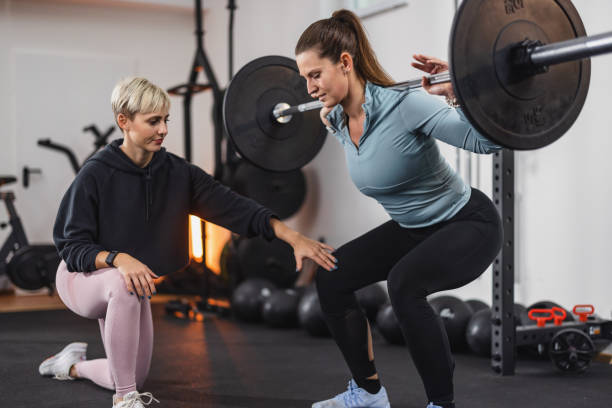
Exercise videos can demonstrate a movement. A coach can observe how you perform it and give you feedback.
That distinction matters when you are learning.
You might need help adjusting your stance, controlling the weight, setting up equipment, or choosing a different exercise variation.
A certified personal trainer can explain those adjustments in terms you understand.
During a squat, for example, your coach might suggest using a box as a target or changing the resistance so you can practice the movement with more control.
Coaching also helps you decide how hard to work.
Some people hesitate to increase their weights even when they are ready. Others assume that every workout needs to leave them exhausted.
Your trainer can help you build a more measured approach. Progress may involve additional repetitions, a small increase in resistance, or better control at the same weight.
No coach can eliminate every injury risk. However, real-time feedback gives you an opportunity to identify and address problems instead of repeatedly guessing.
You should leave a session with a better understanding of how to train, along with the satisfaction of having done the work.
3. Accountability Helps You Create a Consistent Routine
Most people already know that exercise matters. Finding a routine they can sustain is often the harder part.
Work runs late. Family responsibilities change. A missed session becomes a missed week.
A trainer can help provide structure through scheduled appointments, specific goals, and regular conversations about how things are going.
Effective accountability should help you solve problems.
If you keep missing an evening appointment, perhaps a morning session would fit better. If your training schedule feels overwhelming, you might need a more manageable commitment.
A good coach should help you find a practical next step when things go off track.
That support matters because fitness is built through repeated effort over time. One impressive workout cannot replace a routine you can maintain.
You do not need someone to make you feel guilty about a busy week. You need clear expectations and a workable way to get back into your rhythm.
Consistency becomes more achievable when your plan accounts for your actual life.
4. Your Progress Gets Tracked, and Your Program Can Adapt
How do you know whether your training is working?
If you only look at the scale or judge your workouts by how sore you feel, you may overlook useful information.
Depending on your goals, progress might include:
-
- Lifting more weight with controlled technique.
-
- Completing more repetitions.
-
- Taking fewer breaks during a familiar workout.
-
- Feeling more confident using equipment.
-
- Attending your planned sessions more consistently.
-
- Handling everyday physical tasks more comfortably.
A certified personal trainer can help you choose relevant measures and review them over time.
Tracking also gives you a basis for making adjustments.
If an exercise has become easier, it may be time to increase the challenge. If you are returning after time away, you may need to rebuild gradually.
Your program should also respond to changing circumstances, including a demanding work schedule or a period of reduced recovery.
Professional judgment includes recognizing when you need support beyond personal training. A fitness certification alone does not qualify a trainer to diagnose injuries or provide medical treatment. ACE’s scope-of-practice guidance emphasizes referring clients to appropriate healthcare professionals when needed.
A coach who knows their professional boundaries is helping you make informed decisions.
5. You Build Confidence and Skills That Last
One of the most valuable outcomes of coaching is learning how to take a more active role in your own fitness.
In the beginning, you may need help with almost everything, from equipment setup to choosing a weight.
With practice and clear instruction, those decisions can become more familiar.
You begin to understand your exercises. You learn how to record your workouts. You become more comfortable asking questions and recognizing when you need an adjustment.
A good trainer should welcome questions such as:
-
- Why is this exercise in my program?
-
- What should I focus on during this movement?
-
- How will we decide when to increase the weight?
-
- What can I do if this equipment is unavailable?
-
- How does this session support my goals?
Understanding the reasoning behind your program makes you a participant in the process.
Some people prefer ongoing coaching. Others use personal training to build a foundation before doing more exercise independently.
Either way, the knowledge and confidence you develop can remain useful outside your appointments.
The value of coaching includes what you learn to do for yourself.
What Should You Look for in a Certified Personal Trainer?
The NSCA’s personal trainer certification requirements include current CPR and AED certification
A credential is an important starting point. Coaching quality, relevant experience, and communication matter too.
Ask which certification the trainer holds and whether it is current. Look for an independently accredited certification program, such as one accredited by the National Commission for Certifying Agencies, or NCCA.
Check the exact credential. Completing a course is not always the same as earning an accredited professional certification. ACE, for example, distinguishes between its personal training certificate and its NCCA-accredited personal trainer certification.
Ask about current CPR and AED training as well. Those are requirements for credentials such as the NSCA Certified Personal Trainer certification.
Then consider the coaching relationship.
Does the trainer listen? Can they explain their recommendations clearly? Have they worked with people who have similar goals? Do you feel comfortable discussing concerns?
Certification provides a foundation, but you should also feel confident in the person applying that knowledge.
Frequently Asked Questions
Do I need to get in shape before hiring a personal trainer?
No. Helping you identify an appropriate starting point is part of the coaching process. Be open about your experience, current activity level, and concerns.
Is personal training only for beginners?
No. Experienced exercisers may also benefit from technique feedback, structured progression, and support with a specific goal.
Can I receive coaching in a group class?
Yes. A well-coached group class can offer instruction, exercise modifications, and encouragement. Private training typically provides more individual attention. Ask how the studio accommodates different experience levels.
Does working with a certified personal trainer guarantee results?
No. Results depend on factors including your starting point, consistency, recovery, and whether the program fits your goals. A trainer can guide the process, but certification alone does not guarantee outcomes.
Start Your Fitness Journey With Wilcox Fitness
You do not have to walk into a studio knowing exactly what to do.
You can start with questions. You can start after a long break. You can start with a goal as simple as wanting to feel stronger and more capable in everyday life.
If you are looking for personal training in Pilot Point, Texas, connect with Wilcox Fitness to discuss your goals and explore private training or coached group options.
The first step is a conversation about where you are, what you want to accomplish, and the support that fits your needs.
Schedule your introductory conversation with Wilcox Fitness and start building a routine you can grow with.